Tuesday, 6 September 2011

The Fith Fath Song (TRAD unknown date)


I will go as a wren in spring
With sorrow and sighing on silent wing
And I will go in the Lady's name
Aye until I come home again

We will follow as falcons grey
And hunt thee cruelly for our prey
And we will go in the Good God's name
Aye to fetch thee home again

I will go as a mouse in May
Through fields by night, through cellars by day
And I will go in the Lady's name
Aye until I come home again

We will follow as black tom cats
And hunt thee through the corn and vats
And we will go in the Good God's name
Aye to fetch thee home again

I will go as an autumn hare
With sorrow and sighing and mickle care
And I will go in the Lady's name
Aye until I come home again

We will follow as great grey hounds
And dog thy steps by leaps and bounds
And we will go in the Good God's name
Aye to fetch thee home again

I will go as a winter trout
With sorrow and sighing and mickle doubt
And I will go in the Lady's name
Aye until I come home again

We will follow as otters swift
And snare thee fast ere thou canst shift
And we will go in the Good God's name
Aye to fetch thee home again


Monday, 8 August 2011

John Barleycorn by Robert Burns/Trad. (1782)


There was three kings went to the east,
Three kings both great and high,
And they hae sworn a solemn oath
John Barleycorn should die.

They took a plough and plough'd him down,
Put clods upon his head,
And they hae sworn a solemn oath
John Barleycorn was dead.
 
But the cheerful Spring came kindly on'
And show'rs began to fall;
John Barleycorn got up again,
And sore surpris'd them all.

The sultry suns of Summer came,
And he grew thick and strong:
His head weel arm'd wi pointed spears,
That no one should him wrong.

The sober Autumn enter'd mild,
When he grew wan and pale;
His bendin joints and drooping head
Show'd he began to fail.

His colour sicken'd more and more,
He faded into age;
And then his enemies began
To show their deadly rage.

They've taen a weapon, long and sharp,
And cut him by the knee;
They ty'd him fast upon a cart,
Like a rogue for forgerie.

They laid him down upon his back,
And cudgell'd him full sore.
They hung him up before the storm,
And turn'd him o'er and o'er.

They filled up a darksome pit
With water to the brim,
They heav'd in John Barleycorn-
There, let him sink or swim!

They laid him upon the floor,
To work him farther woe;
And still, as signs of life appear'd,
They toss'd him to and fro.

They wasted o'er a scorching flame
The marrow of his bones;
But a miller us'd him worst of all,
For he crush'd him between two stones.

And they hae taen his very hero blood
And drank it round and round;
And still the more and more they drank,
Their joy did more abound.

John Barleycorn was a hero bold,
Of noble enterprise;
For if you do but taste his blood,
'Twill make your courage rise.

'Twill make a man forget his woe;
'Twill heighten all his joy:
'Twill make the widow's heart to sing,
Tho the tear were in her eye.

Then let us toast John Barleycorn,
Each man a glass in hand;
And may his great posterity
Ne'er fail in all the land!


Tuesday, 26 July 2011

The danger of living in the past


For many or perhaps the majority of Pagans living in the developed world, our heritage and history remains an important influence on our contemporary lives. However, in some cases we may perhaps be guilty of viewing the past through rose tinted glasses.

Let me explain, I am a twenty-first century Pagan. I am I hope inspired by the past but I do not want to live in it. I like having a microwave oven and I do not want to live in a wattle hut, I would miss the convenience of a flushing toilet.

We need to recognise that change, although not always for the better is part of life. We as Contemporary Pagans know full well that our practice is not the same as that of our ancestors but that does not actually matter. By being inspired by our past we can develop new ways of expressing ourselves.

If we attempt to reconstruct an exact historical practice, instead of creating a living breathing spirituality. We run the risk of creating a museum piece, a spirituality and a spiritual practice that is in danger of stagnating.

There is a tendency in some circles to focus on writings of the past, as fixed and beyond further interpretation. Just because Moses, Jesus, Mohamed, Crowley, Gardner or Cochrane said or wrote something, does not automatically mean it was right then or necessarily appropriate now. To accept without question risks this stagnation.

Times change and while being inspired by the past, we should not give up our ability to think for ourselves. I do not seek to recreate a spirituality, I am already living one.

First published 2008


Thursday, 9 June 2011

Buzzards, boulders and the return of the May Queen #3


The activities of the Hearth proper and by that I refer to the founding and admitted members of the Inner Court have of late been less than public. At the turning of the year the Hearth of the Turning Wheel sadly lost two members; whose interests now draw them towards a more solitary path and it is with sadness that we have said goodbye to them.

This has quite naturally brought about a degree of restructuring, with one manifestation of this being our increased dissatisfaction with some forms of website networking. The result of this restructuring has in one context, been the creation of this BLOG, as the website used previously no longer suits all of our needs.

Since the Hearth of the Turning Wheel is a small private group the loss, gaining and potential re-gaining of members is of great significance to our existence and functioning. Our modus operandi and modus vivendi: that is our manner of working and our manner of living. We are a family.

This family, the entire Hearth met on what was our third group trip in less than a week, accompanied by two spouses and two children on the morning of Mayday itself. It was a gathering of some importance as not only was our intention to mark the Maytide with an outdoor ritual at a Peak District location but to welcome the return of a dear one. This dear one to me, who having made a considerable contribution to the Hearth before choosing to rest from our activities, has chosen to return to us post marriage and first child.

We all eventually met at a carpark on the outskirts of Birchover, an enjoyable journey through Derbyshire countryside made more interesting by the detours through picturesque villages such as Winster. These detours where not entirely planned, the Defender of the Hearth was my lift for the day and I was navigator. Unfortunately as with our previous trips that week, my OS map being rather old, proved to be somewhat unreliable.

The proposed shortcut to avoid the Bank Holiday traffic in Matlock by taking the Cromford road, turned into a mystery tour of beautiful villages but added thirty minutes or more to our journey. Taking the car along what is on my map shown as a road but is now a rough track more suitable for tractors, was an exciting experience and made me realise how much I miss the Hearth Defender’s own Landrover Defender.

It has been many months since guests have attended any of our rituals. The majority of our meetings this year have been of a private nature and the presence of guests has been inappropriate. This does not mean that we have closed the Hearth to guests entirely, merely that certain rites remain private and will continue to do so. A rite of admission or re-admission falls into this category of private ritual and so on this Maytide morning the gathering at Doll Tor was a select band.

Two husbands and two children diplomatically set off to explore the woodland and the nearby Andle Stone, while the remaining group set up the necessary equipment within the circle. There was little enough equipment; four staffs one for each quarter, a wand, a blade, a chalice of mead and one of oil, two arrows, one with black flights and the other with white. It was a simple and poignant ritual created by the Defender, with as one would expect from a committed Heathen, a certain runic incorporation within the sequence.

Introduced into the middling part of the ritual was the rite of re-admission. This, an equally simple and no less poignant rite, involved our candidate under the guidance of the Defender, making a declaration, followed by an acceptance by the group. The second part of the rite required the retaking of the coven oath on the Hearthsword, prior to an anointing of the forehead by the Summoner. The words used underscoring the feeling that the returning member, in spirit had never left us but now in flesh does return. Finally, to emphasise this return, we all joined hands for the repeating of our vows.

The ritual however was not yet over as we had yet to elect the Queen of the May, who blessing the mead and bread would then reign for a year. The election of our May Queen was for this occasion arranged prior to the ritual, so it was that our returned member was hailed as the Queen of the May and decked with a crown of flowers, presented with the Summer Arrow as her Staff of Office. Together the May Queen and Defender lead the group in the closure of the ritual, it was a good day and it was not yet over.

An important factor in any outdoor ritual is the necessity to leave no trace, to leave no rubbish and if it is at all possible, to leave the site cleaner than when you arrived. This apart from some mead poured upon the earth and some breadcrumbs, we did. It is a shame that many visiting the countryside will leave litter in the form of crystals and candle wax. Of this practice, we of the Hearth of the Turning Wheel do not approve.

Doll Tor itself, is both a circle and a burial cairn situated in beautiful woodland and it has as mentioned before, a certain charm and enchantment about it. The atmosphere is light-hearted and somewhat frivolous. Whether this is because the associated burial cairn is that of a child, I choose not to speculate. I merely offer the observation that the energy of the site is merry and playful.

Finally, we joined the non-Hearth family members in their woodland exploration and the climbing of the Andle Stone, before our retun to the cars. Then it was only a short drive to Rowsley for a spot of lunch. It had been a good day and now it was over.

Thursday, 2 June 2011

Buzzards, boulders and the return of the May Queen #2

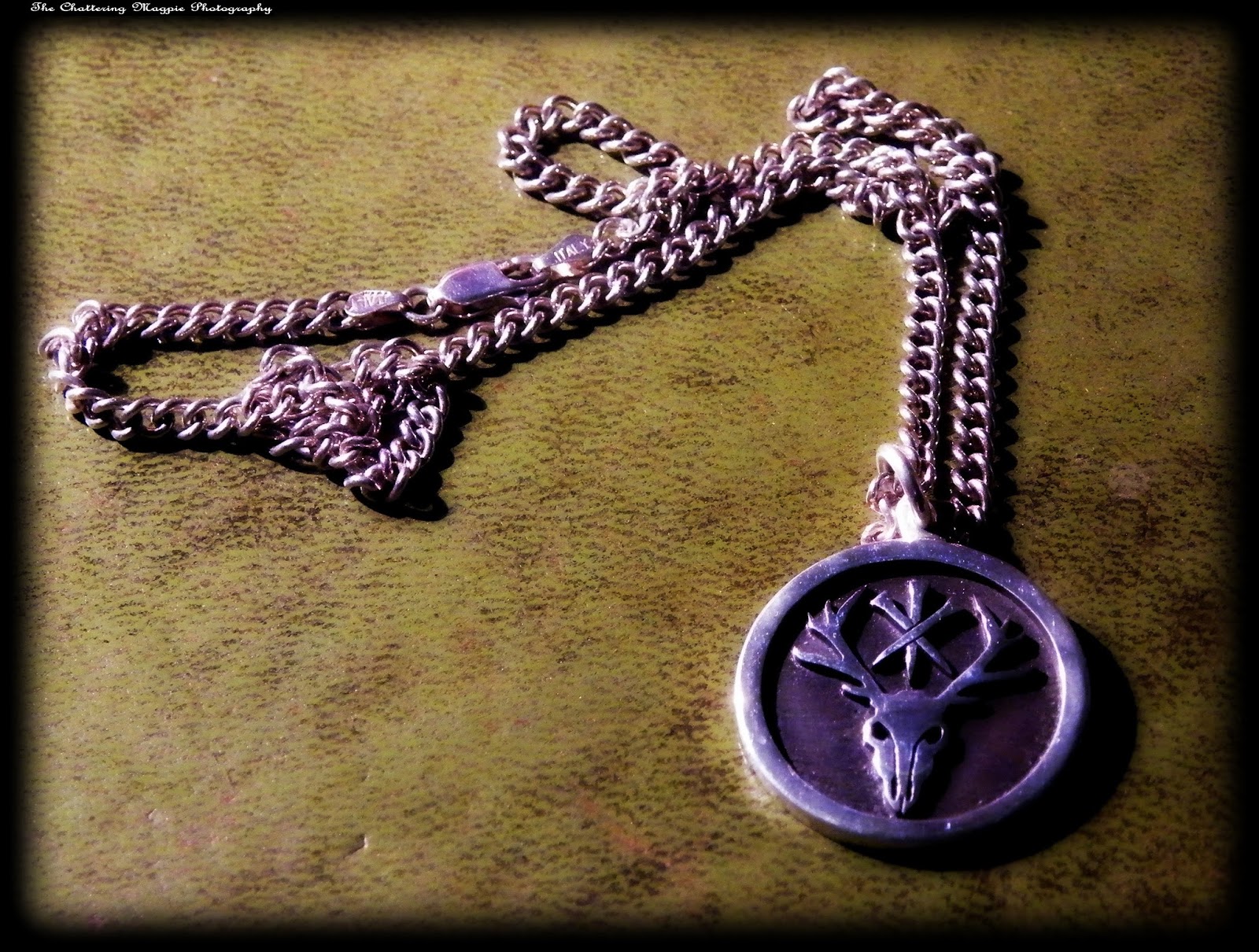
Our second trip began with a drive to Arbor Low, the Stonehenge of the North and a magnificent henge of great antiquity. The three of us this time, walking the bank while awaiting the arrival of our friends from the Clan and on their arrival, we took a walk to the nearby Gib Hill, a burial mound that perhaps fascinates me more than the main complex of Arbor Low. As we approached Gib Hill and while the ubiquitous buzzards circled above, the Maid gifted me a horse-brass depicting her husband’s namesake, recognising both my current fascination and my Craft affinity with all things Sherwood. I appreciated the gift.
We lunched in Birchover at the famous Druid’s Inn no less, an enjoyable meal with equally enjoyable company, our thoughtful conversations covering subjects wide ranging and stimulating. Avoiding the hullabaloo of the Royal Wedding, we went to explore the nearby graveyard. We stood marvelling at the forgotten Saxon carvings set into the back wall of the chapel. So few even know these carvings exist yet they are worth searching for, mysterious and mute they may be yet still somehow, they speak to us.

Our next destination of what was already a full and eventful day was across the lane, the hillside above the inn, home of the famous Victorian folly complex known as Rowter Rocks. This small hill is topped by a rocky outcrop of natural caves and boulders, some bearing trough and cup-like carvings, some of which are believed to be of a great age. During the Victorian period and in the belief that the Rocks where an ancient Druidic sacred site, there were a series of “improvements” made. These included the extension of existing caves, the addition of a cave or two and the addition of carvings said to be of an occult significance.
 Although this has made the Rocks a fascinating place to visit, they did not need improving, some archaeology has been obliterated while what remains has it can be argued, lost its context. Rowter Rocks remain mysterious however, an enigma that raises questions, not only about its importance during the pre-Celtic age but also what exactly did the Victorians want to achieve?
Leaving Birchover behind us, we headed for the outcrop known as Robin Hood’s Stride. This large looking but easily climbable rock is strikingly visible when seen from some angles, looking like a great horned mass on the skyline. There are two large natural pillars of rock almost at either end of the rock and it is said, that Robin Hood could reach across them in one long stride. Quite a feat really and depicts the “giant” aspect of the Robin of myth rather than reality.
Near to this remarkable natural feature and lying a little way towards Youlgreave and Bradford is Castle Hill, an ancient site of Celtic origin and down the hill are the Grey Ladies, a stone circle that is also known as Nine Stones Close. There are only four stones now remaining but they are the tallest in the county. We however gave both Castle Hill and the Grey Ladies a miss this time and instead, went to see the nearby hermitage.
Cut into the rocks that lie less than half a mile north from the Stride and thankfully protected from vandalism by an iron grill, is a medieval hermitage. What was obviously a natural cave has been extended and when in use, would have had a wooden shelter attached. Inside however, is a little known Derbyshire gem in the form of a carving depicting Christ Crucified. The workmanship is quite impressive and represents the devotion of one of the hermitages’ early inhabitants.
The surrounding landscape is a sacred one and has been from ancient times. Pre-Christian and Christian having recognised something in this landscape, have as in other parts of the country, chosen to mark the land as special, apart, sacred and inspirational. From the builders of the henges, the stone circles and the cairns from the legends attached to them and natural features such as Robin Hoods’Stride and Rowter Rocks and including the later arrival of the new-religion marked so vividly by this magnificent hermitage. All have recognised the inherent divinity within the land and chosen to pay homage in their own unique manner.

Saturday, 28 May 2011

Buzzards, boulders and the return of the May Queen #1

The last week of April and the first week of May have here in Derbyshire as in other parts of the UK, been notable for the somewhat unseasonal warmth and sunshine. This has given many of us a valued opportunity to explore our local countryside once again.

This has also proved to be a most eventful time for us in the Hearth of the Turning Wheel. During the latter week of April, we twice explored the wonderful Derbyshire Peak District, on our second trip meeting up with friends from another Clan. Then on Mayday itself, we marked the return to our Hearth of a dear one, a much valued and missed member who has rested from active participation for some years.

So it was in preparation for our Maytide ritual and rite of re-admission, that the Hearth Pixie and myself made the first journey to Stanton Moor, just inside the Peak. Our aim being to both check the directions to and the suitability of our chosen site for the planned ritual. Parking near to Birchover it was only a short walk to our destination, a small circle of six stones hidden in woodland. Although this was not my first visit, my taxi driver, sorry I mean my companion Pixie, had not visited this circle before. She found herself truly enchanted by its charm and understandably so.


Doll Tor and obviously, it is Doll if you know the Peak, is a charming circle hidden from the road in woodland down a slight incline. There are truly beautiful views of Youlgreave and Bradford from the woodland, a prospect of great delight on a bright summer-warm day. My companion derived no small amount of joy from this visit, sitting in the circle for quite some time after I had done what I had felt necessary to do on entering the site.


The site has a chequered history, damaged, desecrated and neglected until finally rebuilt by archaeologists and rediscovered by the local Pagan community. Today Doll Tor is a dearly loved site, sometimes difficult to find it remains far more private than the nearby Nine Ladies.


After our all too brief visit that was probably not as brief as it actually felt and lunch at the well-known Cauldwell’s Mill vegetarian restaurant, we spent a short time watching the blacksmith at work. We found ourselves truly fascinated by his craft and his creation, his own personal blackthorn walking stick, topped with an iron Derby Ram. Moving on and perhaps rather ambitiously having just eaten, we set out to climb the fairy hill that is Peak Tor. This is my favourite hill in the Peak, a conical and steep outcrop, topped with beech and oak, it dominates the landscape near Rowsley. It is a steep climb depending on from which side you choose to approach and as we reached the summit, we were greeted by sunlight dappled trees and bluebells in full bloom.

The views from the Tor are worth the climb, looking down on the Wye and across to the trees hiding Haddon, with Chatsworth only a short distance away on the other side of the hills, it is a beautiful place. We spent some time taking in the vista, fields, rivers, trees and hills. There is an atmosphere here at the top where the hill flattens out. From below, looking up Peak Tor calls to you, inviting you to climb and embrace the very hill itself. It is otherworldly.


So ended our first trip, a fact-finding orientation taking in two of my favourite places in the Peak or three if you count the restaurant. Both Doll Tor and Peak Tor have that effect of making you not want to leave them, they enchant and bewitch visitors, casting their own spell upon those they welcome.

Wednesday, 27 April 2011

The Springtide and the coming of the May

For those of us living in the so-called developed world, it is difficult and perhaps impossible, to ignore the current focus of both the secular and Christian world. Those of us within Paganism and the Craft however, may hold a different perspective on current trends.

Much of the secular world and indeed our own Christian friends have been focused upon the Eastertide, the great observance and celebration of renewal and the promise of new life. Although falling this year in April and later than what is perhaps usual, the associated symbolism is still decidedly spring-like.

We in the Hearth have a somewhat different calendar. Our own spring observance, a celebration of the mid-point rather than the beginning of spring, was some weeks ago. Our focus now is very much on the coming of the May.

Many today know the spring equinox as Ostara or Eostre, the name of a Saxon Goddess of the Spring, a balance to the autumn equinox known by the name of a Celtic God, Mabon. For many years now, I have been uneasy using these names, preferring to call the equinoxes as exactly that, the equinoxes. It is a personal choice.

If ones’ practice is influenced by one culture or another, be it Saxon or Celt, then there is an argument for using one of these titles. I myself lean perhaps more towards the Saxon than the Celt and find admittedly, Ostara somewhat more acceptable as the name of a festival than Mabon, even though I rarely use it.

The adoption of these names for our contemporary festivals by many, without a close examination of their origin, reflects that sad mid-Atlantic and perhaps “Wiccanesque” standardisation of practice prevalent in contemporary Paganism. I for one prefer to celebrate our regional differences.

Ostara or Eostre is an enigmatic Goddess whose origin is unknown and if it was not for some brief mention by Bede, her name would be lost to us. We know so little about her historically, that it is luck that her name has survived to lend itself to both the Pagan and Christian spring festival. We could so easily be calling both festivals by very different names.

However, it is not the name that matters but the associated symbolism and the related meaning. Ostara or Eostre, is most likely a localised manifestation of the Goddess of Spring, celebrations in whose honour can be deduced from history and based on the evidence available to us, calling this spring festival Ostara, may have more validity than calling the autumn equinox Mabon.

Ostara is a Goddess with a meaning that is cross-cultural and universal, as are the symbols associated with the spring. The egg as a symbol of renewal and birth, crosses the same cultural boundaries. The Easter Bunny, a well known corruption of the Sacred Hare, leads us to draw comparisons with other “Hare Goddesses” and is yet another symbol with a wealth of meaning. Neither the egg nor the hare uniquely belong to the new religion but have been grafted on through folklore and tradition to become elements of a Christian Easter.

The second focus that the world currently appears obsessed with is quite obviously the wedding of the future heir to the English throne. The close proximity of Easter, with the feast day of Saint George falling between Good Friday and Easter Sunday, followed by a second Bank Holiday for the wedding at the beginning of the May Day weekend, has given many of us the opportunity to celebrate everything quintessentially English.

While on the one hand the spring like elements incorporated within the symbolism and celebration of Easter might appear somewhat out of season. The celebration of the marriage of a future king so close to May Day, with all its royal associations linked to the Oak King and the romantic and indeed sexual nature of Beltaine itself, merely seeks to emphasise the forcefully energetic elements found within these inter-related events.

The Maytide is near upon us and it is a time of celebration. It is a time to honour whichever royal house you favour, whether it is the House of Windsor or the House of the Greenwood.

FFF&F. Magpie.

Monday, 11 April 2011

"Broadsword" by Jethro Tull

I see a dark sail on the horizon.
Set under a black cloud that hides the sun.

Bring me my broadsword and clear understanding.
Bring me my cross of gold as a talisman.
Get up to the roundhouse on the cliff-top standing.
Take women and children and bed them down.

Bring me my broadsword and clear understanding.
Bring me my cross of gold as a talisman.
Bless with a hard heart those who surround me.
Bless the women and children who firm our hands.
Put our backs to the north wind. Hold fast by the river.
Sweet memories to drive us on for the motherland.