Thursday, 26 April 2018

Corinna's Going a Maying by Robert Herrick


Get up, get up for shame, the Blooming Morne
Upon her wings presents the god unshorne.
                     See how Aurora throwes her faire
                     Fresh-quilted colours through the aire:
                     Get up, sweet-Slug-a-bed, and see
                     The Dew-bespangling Herbe and Tree.
Each Flower has wept, and bow'd toward the East,
Above an houre since; yet you not drest,
                     Nay! not so much as out of bed?
                     When all the Birds have Mattens seyd,
                     And sung their thankful Hymnes: 'tis sin,
                     Nay, profanation to keep in,
When as a thousand Virgins on this day,
Spring, sooner than the Lark, to fetch in May.


Rise; and put on your Foliage, and be seene
To come forth, like the Spring-time, fresh and greene;
                     And sweet as Flora. Take no care
                     For Jewels for your Gowne, or Haire:
                     Feare not; the leaves will strew
                     Gemms in abundance upon you:
Besides, the childhood of the Day has kept,
Against you come, some Orient Pearls unwept:
                     Come, and receive them while the light
                     Hangs on the Dew-locks of the night:
                     And Titan on the Eastern hill
                     Retires himselfe, or else stands still
Till you come forth. Wash, dresse, be briefe in praying:
Few Beads are best, when once we goe a Maying.


Come, my Corinna, come; and comming, marke
How each field turns a street; each street a Parke
                     Made green, and trimm'd with trees: see how
                     Devotion gives each House a Bough,
                     Or Branch: Each Porch, each doore, ere this,
                     An Arke a Tabernacle is
Made up of white-thorn neatly enterwove;
As if here were those cooler shades of love.
                     Can such delights be in the street,
                     And open fields, and we not see't?
                     Come, we'll abroad; and let's obay
                     The Proclamation made for May:
And sin no more, as we have done, by staying;
But my Corinna, come, let's goe a Maying.


There's not a budding Boy, or Girle, this day,
But is got up, and gone to bring in May.
                     A deale of Youth, ere this, is come
                     Back, and with White-thorn laden home.
                     Some have dispatcht their Cakes and Creame,
                     Before that we have left to dreame:
And some have wept, and woo'd, and plighted Troth,
And chose their Priest, ere we can cast off sloth:
                     Many a green-gown has been given;
                     Many a kisse, both odde and even:
                     Many a glance too has been sent
                     From out the eye, Loves Firmament:
Many a jest told of the Keyes betraying
This night, and Locks pickt, yet w'are not a Maying.


Come, let us goe, while we are in our prime;
And take the harmlesse follie of the time.
                     We shall grow old apace, and die
                     Before we know our liberty.
                     Our life is short; and our dayes run
                     As fast away as do's the Sunne:
And as a vapour, or a drop of raine
Once lost, can ne'r be found againe:
                     So when or you or I are made
                     A fable, song, or fleeting shade;
                     All love, all liking, all delight
                     Lies drown'd with us in endlesse night.
Then while time serves, and we are but decaying;
Come, my Corinna, come, let's goe a Maying.


Big Yellow Taxi by Joni Mitchell


They paved paradise
And put up a parking lot
With a pink hotel, a boutique
And a swinging hot spot

Don't it always seem to go
That you don't know what you've got
‘Til it's gone
They paved paradise
And put up a parking lot


They took all the trees
And put them in a tree museum
Then they charged the people
A dollar and a half just to see 'em

Don't it always seem to go,
That you don't know what you've got
‘Til it's gone
They paved paradise
And put up a parking lot


Hey farmer, farmer
Put away that DDT now
Give me spots on my apples
But leave me the birds and the bees
Please!

Don't it always seem to go
That you don't know what you've got
‘Til its gone
They paved paradise
And put up a parking lot


Late last night
I heard the screen door slam
And a big yellow taxi
Took away my old man

Don't it always seem to go
That you don't know what you've got
‘Til it's gone
They paved paradise
And put up a parking lot

They paved paradise
And put up a parking lot
They paved paradise
And put up a parking lot


Monday, 9 April 2018

CANTICLE OF THE SUN BY FRANCIS OF ASSISI


Most High, all powerful, good Lord, yours are the praises, the glory, the honour and all blessing. To You alone, Most High, do they belong, and no man is worthy to mention Your name.


Be praised, my Lord, through all your creatures, especially through my lord Brother Sun, who brings the day; and you give light through him. And he is beautiful and radiant in all his splendor! Of you, Most High, he bears the likeness.


Praised be You, my Lord, through Sister Moon and the stars, in heaven you formed them clear and precious and beautiful.


Praised be You, my Lord, through Brother Wind, and through the air, cloudy and serene; and every kind of weather through which You give sustenance to Your creatures.


Praised be You, my Lord, through Sister Water, which is very useful and humble and precious and chaste.


Praised be You, my Lord, through Brother Fire, through whom you light the night and he is beautiful and playful and robust and strong.


Praised be You, my Lord, through Sister Mother Earth, who sustains us and governs us and who produces varied fruits with coloured flowers and herbs.


Praised be You, my Lord, through those who give pardon for Your love, and bear infirmity and tribulation. Blessed are those who endure in peace for by You, Most High, they shall be crowned.


Praised be You, my Lord, through our Sister Bodily Death, from whom no living man can escape. Woe to those who die in mortal sin. Blessed are those whom death will find in Your most holy will, for the second death shall do them no harm. Praise and bless my Lord, and give Him thanks and serve Him with great humility.


Lyrics from ‘The Trap’


“When I'm a man, I'll take me a wife;
We'll live in a house on the hill, the hill;
With carriage and horses all white, all white;
And she shall have diamonds and pearls, and pearls;
And she shall have diamonds and pearls.”


Original 1966 score by Ron Goodwin.


Saturday, 24 March 2018

HAS SPRING FINALLY COME?


The spring equinox has come and gone, we now approach the end of March and the coming of Easter. Earlier this month I wrote a blog called ‘In winter’s Grip’ and in that blog I discuss briefly, England’s rather abnormal weather front. See link below.


Putting aside that snow in February is hardly unknown in England, we do have to take on board, that this spring has been one of the coldest in living memory. The month has been distinctly notable for the blizzards, which have continued through March right to the equinox. In some parts the lambs have come a little late, as have the few brave spring flowers that have so far, sallied forth from the depths.


I have been rather fortunate, I have taken annual leave the week before and the week of the equinox. Yet the month has been rather full on, both sweet and sour. A bereavement during the latter part of February cast a shadow, a shadow long enough to touch the beginning of March and tinge spring with an element of sadness.


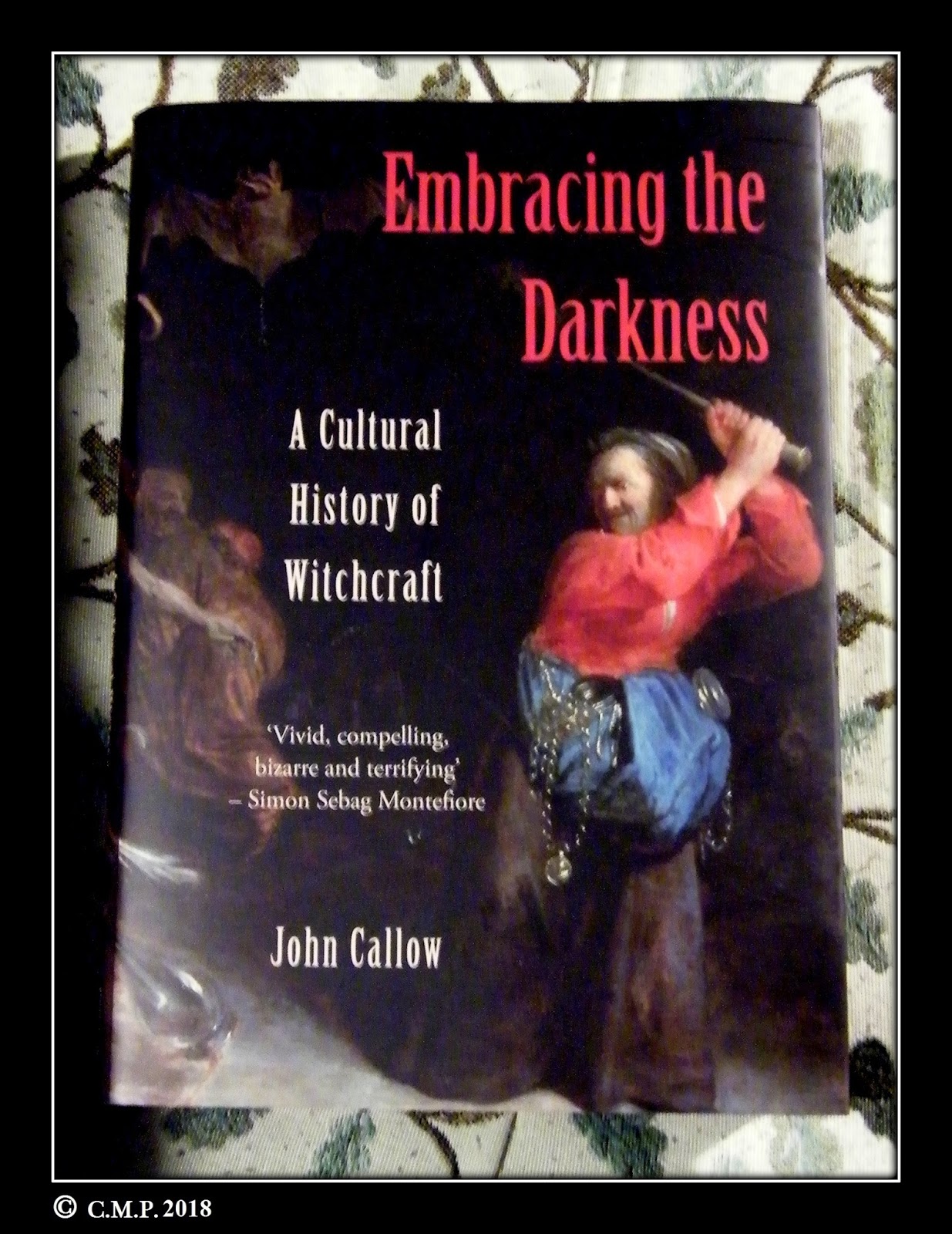
Noting this however, we should not dwell too long upon the more negative aspects of the month. My annual leave began with a trip to London and a visit to the Fortean Society at Conway Hall. I was there to hear a most informative lecture on Herne the Hunter and Robin Hood. This was delivered with great professionalism by John Callow, who was courteous enough to sign his new book. It was a thoroughly enjoyable evening, the subject is very much my personal area of interest and a review will eventually be forthcoming.


That week of annual leave was indeed a busy one, perhaps capturing the slow change of tide as winter very slowly relinquished its grip. A change barely discernible in the air yet extant. I was active, attending two meetings relating to a charitable venture, I had meetings with friends and I saw a rather good amateur production of Tommy, it was quite enough to keep me occupied that week.


During the latter part of that same week prior to the equinox, we held our usual moot. It was our delight to drink to the health of two of our attendees who had just announced their engagement. We hoped that this was a sign, the winds of change and that spring was truly in the air. However, that weekend the snows returned, less fierce but as disruptive as previously noted. A reminder that the Snow Queen was not yet ready to depart.


We the Hearth of the Turning Wheel, should have been holding our spring equinox meeting on Monday the 19th of March. The eve of the official date. Due to the inclement weather we postponed one day, meeting for our observance on the evening of the 20th. During this ritual we read poetry and distributed chocolate eggs.


“Ostara is new light, soft sweet air, the running hare and spring flowers. The bursting of buds and the straight following of new paths. May the spirits of the air guide our thoughts when we set out on new paths. May the spirits of the Sun and fire give us vitality and passion to make new ventures successful. May the spirits of water help us to tread new paths with balanced emotions. May the spirits of the earth give us physical balance so we may draw life and health from the strengthening Sun. May the Gods watch over us this springtime and may we continually remember to give thanks to them for this new season.” Poem adapted from Duff G. (2002) ‘The wheel of the Wiccan year.’ Rider Publishing.


Since only a few of us had been able to attend and I had bought plenty of chocolate eggs, we had enough for two each. Wrapped around each egg I had placed a slip of paper and upon each slip, was typed a motto taken from the Anglo Saxon Rune Poem. These served as a little pointer or message for the recipient. My two stanzas of the poem are reproduced below.

Peorth is a source of recreation and amusement to the great, where warriors sit blithely together in the banqueting-hall.’

‘The joyous man is dear to his kinsmen; yet every man is doomed to fail his fellow, since the Lord by his decree will commit the vile carrion to the earth.’


Within a day or so of the equinox there was without doubt, a change in the air. There was less chill, the skies were bright and walking around the village I could appreciate this change. Yet the change was not complete, snow was still present in the secluded parts. Although the hares were out in the fields, those fields were hard and still unwelcoming. To balance this however, I saw my first butterfly and my first bumblebee.


Later in the week I attended the wedding reception of a work colleague. A welcome and complementary event to the engagement announcement made earlier in the week. Capturing as it did, a certain lighter air. Yet despite all this promise, the sun, the lambs, the flowers and the tides of romance. The chill and the ice lingers on. The promise we look for and feel with the lengthening days, seems inconsistent, inconstant and itinerant.


At the time of writing it is the seventh anniversary of this blog and I find myself increasingly aware of its significance to my life. Equally I am surprised at the moderate success of the blog. I appear to have gained some respect in its writing, while building upon my published writings. The blog may have only a few followers but due to shares across the web, primarily Facebook, I now average two thousand visits a month. Who is reading this and why?


All this reminds us how much we cannot take for granted. Success or the lack of it. Respect or the lack of it. We cannot take nature, the weather or indeed even our health for granted. We are all subject to many extraneous factors and our fate is known to none, perhaps not even the Gods. It is with that thought and in the hope that the winter chill will soon rescind, that I end with 'Sigdrifa’s Prayer' from Sigdrifasmal.

“Hail, day!
Hail, sons of day!
And night and her daughter now!
Look on us here with loving eyes,
That waiting we victory win.

Hail to the Gods!
Ye Goddesses, hail!
And all the generous earth!
Give to us wisdom and goodly speech,
And healing hands, life-long.”


Friday, 9 March 2018

The Tragic History of Dr Faustus (2006)


Performed by Third Party Productions at the Guildhall Theatre Derby 17th October 2006

This remarkable play, performed by a small company stopped for only one night in Derby and proved that you do not need huge sets or a huge budget to produce great theatre. One single set, a few curtains and props, three actors and the imagination, swept the theatre back to the sixteenth century to give us the well-known legend of Faust. This was in essence the classic Marlowe play rather than the continental versions of this German legend, having no particular love interest, no Marguerite or her familial intrigues.

As such this play owes more to the Richard Burton stage and film interpretations in which he was actor and director (Doctor Faustus 1967), rather than Gounod’s magnificent nineteenth century opera, or the equally amazing silent film of F. W. Murnau (Faust 1926) starring the then world’s greatest actor, Emil Jannings.


Performed by three actors, each at times playing the ukulele, Faustus (Nicholas Collett) is tempted by Mephistophilis (Anthony Gleave), portrayed as a cross between a travelling salesman and a stage conjuror to sell his soul. The appearance of a seductive Lucifer played in a complete departure from tradition by a female (the striking Fionnuala Dorrity) finally clinches the deal. A few magical stage tricks leaves the audience questioning just what is reality and just what is illusion. This includes the transformation of Mephistophilis from demon to seductress, using only a pair of red high heels and a fan. Acting at its purest.

The ending is of course predictable and unchanging but naturally features the beautiful Marlowe prose, as Faustus regrets his folly and eventually faces his end with all its inevitability. As such this was a more than a competent retelling of a well-known story and if it should tour again, I would highly recommend seeing this play.


The Crucible by Arthur Miller (2007)


Directed by Darren Hall and performed by the Belper Players Amateur Dramatic Society at the Guildhall Theatre, Derby 23rd to 26th May 2007.

Most will at least know something of this famous Miller play oft touted as an attack against the threat of free expression in the USA during the nineteen sixties.

The Players are a well known local group and they perform here with a daring minimalist set and a total lack of period costume. The actors instead perform in uniform white shirts and dark skirt or trousers. Although this may avoid any distraction from the Miller prose the lack of costume I personally found a detraction from the performance.

The story is of a group of young girls caught practising (voodoo) rites in the woods, the resulting scandal leads to the girls turning on the town accusing them of Witchcraft to in part, protect themselves. The result is a tragedy of Shakespearian proportions as numerous innocents are hung for Witchcraft.

Eventually the accusations focus on anyone who has ever crossed the girls in the past and those who dare to doubt them now, as they positively revel in their celebrity.

This includes the wife of John Proctor who had a brief affair with his former servant girl, the ring leader of the accusers Abigail Williams. His wife is taken to prison leaving the man in utter despair and eventually this leads to a meeting with Williams in an attempt to save his wife.

The secret meeting between John Proctor and Abigail Williams in the woods should be filled with sexual tension. Unfortunately at the end of this scene I still found it hard to believe they had so much as held hands, never mind that Proctor had “known her in the barn.”

To be fair the part of Williams is a very difficult one as the actress is expected to portray two very different personalities. To the world at large she must be a child but in private and to the audience, she must convey a sexually experienced girl.

The part is traditionally portrayed as that of a sexually awakening teenage girl but historically it is said that the real Abigail Williams was only twelve years old. Today this is very shocking but still leaves us with a twelve year old girl that first commits adultery and then sets about the judicial murder of her neighbours.

In particular by targeting the wife of her former lover, Abigail hopes that after her death John will return to her. Not an easy part to take on and it is no surprise to see Chelsea Richter struggle at times with the role, many a professional actress has done so before her.

The penultimate scenes however are utterly disturbing and better handled by the cast than the earlier ones. Elizabeth Proctor pleads her belly (pregnant) but by a warped twist of fate her husband stands accused. This leads to a cross examination by the deputy governor played with true menace by Martin Drake that terrifies the audience. The final tragedy is that the principled John Proctor faces the gallows as his wife goes free.

Ultimately this is a classic play given an average but competent performance, with a few moments of sparkle to illuminate the tragic circumstances of the times.

Jekyll and Hyde (the musical 2007)


Performed by Derby Opera Company at the Derby Assembly Rooms Wednesday 8th to Saturday 11th November 2007.

The Derby Opera have a well-deserved reputation of performing with quality and professionalism. This latest production lived up to their previous shows. Directed by Nigel Taylor a London show is performed locally with imagination and with style.

The story is well known and needs little elaboration, a gifted if idealistic doctor explores the inner self, in an attempt to find a cure for mental illness. In doing so he unleashes his darker self, which lacking any inhibitions, is a dangerous and amoral monster.

Hyde and Jekyll being played more than competently by Andrew Booth leads us on a journey into a seedy Victorian London. Booth in the lead role does not in fact steal the show but is instead more than ably supported by the remaining cast. Becky Wallhead as Emma and Lynn Nelson as Lucy, providing conflicting love interests as the bride to be (Wallhead) and a prostitute (Nelson).

What really make this show are naturally the songs. Originally performed in the West End the songs and music of Bricusse and Wildhorn could easily have been spoilt by a company of lesser talent. Instead we are entertained as we explore the darker side of the human psyche.