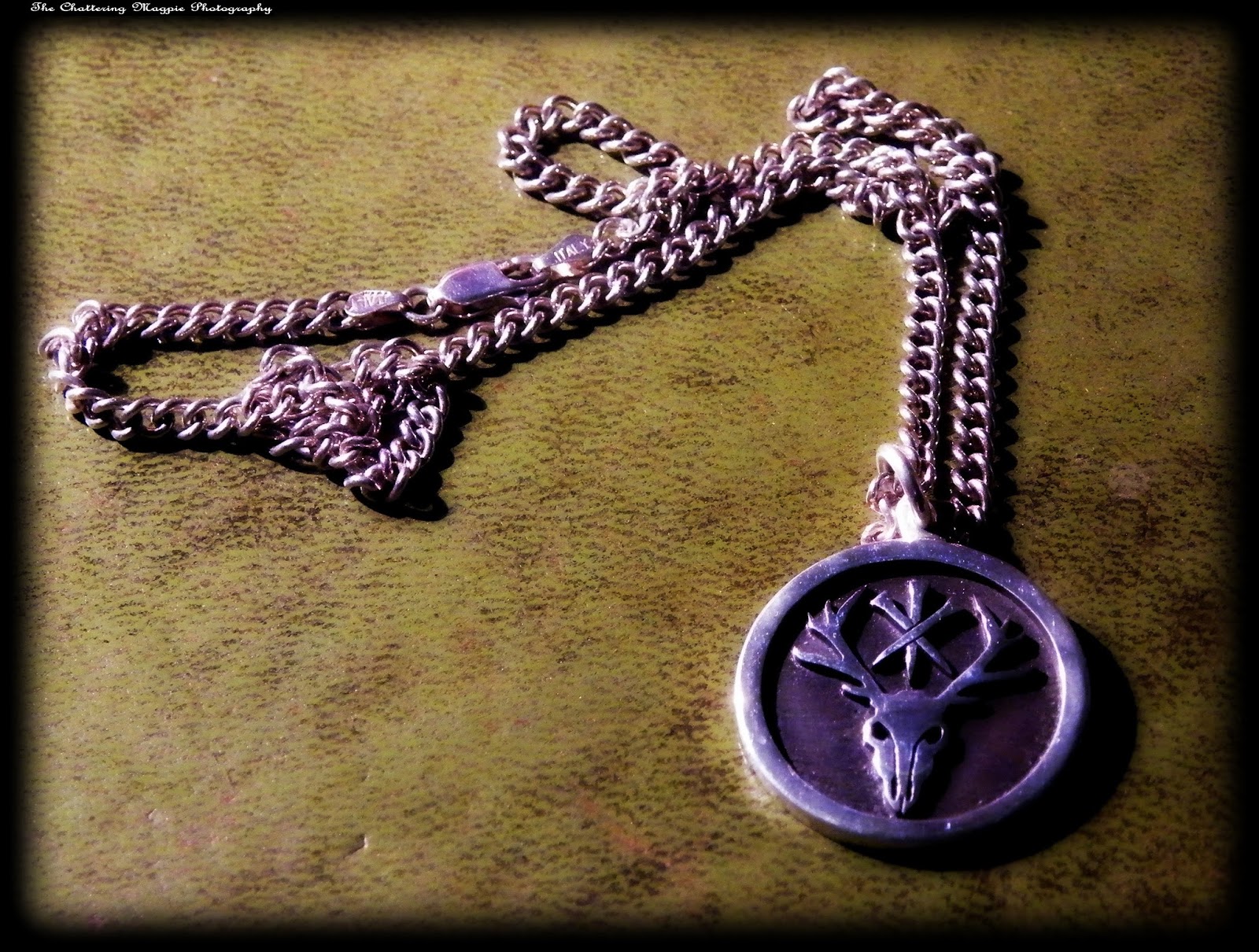
It is one of those strange anomalies that people speak of Paganism as a new religious movement (York 2005) but this is not entirely accurate as in truth it is only half the story. Although contemporary Paganism is rightly regarded as a revival (Hutton 1999), the origins of Paganism and the inspiration for current practice, is ancient and predates other religions. In this sense, Paganism is not a new religious movement at all, it is an old one, changed, revitalised and reborn.
Paganism itself is a very broad term and within this umbrella term are a number of sub-groups or denominations, although in Paganism the term Tradition is used. The primary Traditions within Paganism are Witchcraft, Druidry and Heathenry. Each of these can again be sub-divided and some call these sub-divisions “Paths,” while some may simply use the term synonymously with Tradition.
Paganism is a non dogmatic spiritual path and to say that all Pagans believe exactly the same would be untrue. The truth is that each path or tradition represents one of several variations on a central theme. The most basic concepts of Pagan belief can be expressed as three core statements; the Gods are many, the Divine is everywhere and the Divine is both feminine and masculine (Crowley 1996).
Paganism can be seen as a collective of Earth or nature religions (Harvey 1997, York 2003) but not fertility religions, Paganism as a religious or spiritual World view is nature venerating while recognising many deities, Goddesses and Gods (Jones 1995 and 1996).
Paganism is therefore a combination of Polytheism, Pantheism and Polarity, the concept of the Divine manifesting as both Goddess and God. In contemporary Witchcraft, which some theologians regard as a duotheistic Path within Paganism, they are often simply referred to as the Lord and the Lady. It is this recognition of a Goddess or Goddesses that some feel distinguishes Paganism from other World religions (Morgan 1995, Jones 1995).
Although some today use the term Neo-Pagan it is worth noting that many contemporary Pagans regard this label either as being simply inappropriate (Harvey 2007, Aburrow 2008) or more seriously derogatory (Griffith 2006) and therefore choose not to use it. The word Pagan is also considered a proper noun and should always be capitalised.
When viewed as a collective of Earth Religions the focus of Pagans on the importance of and the need to visit sacred sites becomes easier to understand. We Pagans are fully aware that our contemporary practice is not the same as that of our spiritual ancestors. Pagans do not seek to recreate the past in an identical manner to those known historical practices. Even if this were possible it would be detrimental, leading to a museum piece religion and spiritual stagnation.
Pagans recognise the importance of ancient monuments and sacred sites because they were important to our ancestors, those whom today inspire us. This connection to the land, a recognition not just of the Greater Gods but also the lesser or local Gods including the actual Genius Loci of a particular site, is what for many identifies Paganism as an Earth Religion. By visiting and holding rituals at sacred sites, which can include not just ancient monuments but also hilltops, caves, woodland, moorland and beaches, Pagans seek this spiritual connection with the land itself.
Witchcraft is possibly the most well known of all the Pagan Traditions and one of the least understood within the public arena. Within the last ten years there has been an increased use of the term Wicca as an alternative to Witchcraft, with the term Wiccan being used as a replacement for Witch (Harvey 1997). This is a development postulated by practitioners, particularly those of the Gardnerian Tradition, wishing to avoid the negative connotations associated with the words Witchcraft and Witch. Others it has to be admitted are perfectly at home with the latter phraseology and since these words share a common linguistic origin, may recognise the differing terms as synonyms (West 2000 and 2003, Griffith 2006).
Today the majority of contemporary Pagans recognise and celebrate a sacred calendar built around eight festivals. This “the Wheel of the Year,” although based upon historically recognised celebrations, is a modern development that can be credited to Gardner and Nicholls (Hutton 1999, d’Este and Rankine 2008). The public are aware of these festivals as many were deliberately Christianised by the early European church and many customs found today at Easter, Halloween and Christmas are of Pagan origin.
Of the eight Pagan holy days two are at the forefront of the non-Pagan public perception, often being featured in the media. The Summer Solstice, the point when the sun is at its height and marks the beginning of the astrological sign Cancer, is a solar festival. This means that the date is not fixed but determined by astronomical phenomena, the actual movement of the Sun. The date of the festival can fall as early as the 20th of June or as late as the 23rd and this festival is most often associated with white robed Druids at Stonehenge.
The second festival that is prominent in the public consciousness is Halloween, called by many Pagans “Samhain.” This is an Irish Gaelic word meaning “Summer’s End” and is most often pronounced Sow’en or Sow-ain (Farrar and Farrar 1981). There are other pronunciations and this can cause confusion. However, Ireland like mainland Britain has a plethora of dialects each with their own idiosyncratic manner of pronunciation and similar words also meaning Summers’ End are found in Welsh and Scots’ Gaelic (Nichols 2005).
The festival itself is of Celtic origin and it is both New Year’s Eve and the first day of Winter (Farrar and Farrar 1981). The Celts divided the year into equal halves of Summer and Winter. Summer began on the first day of May, and Winter began on the first day of November (Nichols 2005). The Celts measured the day from sunset to sunset not from dawn to dawn and this is why Celtic festivals are celebrated on the eve of the day marked in the calendar.
In times past the tribes would prepare for the Winter by culling the weaker animals and preserving the meat for the dark months lying ahead. It was a time of feasting, because not all the meat could be saved (Pagan Federation 1994). It was a harvest but the crops were all ready in, so this is the harvest of the animals.
As a harvest Samhain is the third in our Wheel of the Year. The first being August Eve, sometimes known as Lammas or Lughnassadh is seen as the cereal harvest, the Autumn Equinox in September is the harvest of the fruit and the vine. Samhain is historically the blood harvest because of this animal culling and the Heathen calendar recognises this by giving November the name Blotmonath (Jennings 2003) meaning Blood month.
Samhain today is also a spiritual harvest. A time to look back over the past year, a time to review our experiences, a time to remember those we have lost and to consider that more may die during the Winter.
All this leads to further misunderstandings of the festival and has in our modern society, led to an undeserved reputation for evil. This has come about in part due to the focus on death but Samhain is not about death, Pagans have a “death” festival and that is the Autumn Equinox when life in the fields is at an end and the “true” harvest takes place. Samhain is much more a festival of the dead (White and Talboys 2004). It is an important time of remembrance and it is an odd “coincidence” that Remembrance Day falls on November the eleventh, which under the old Julian calendar would have been Old Samhain (Farrar and Farrar 1981).
Like Beltain or May Eve which is the time of the Fairy Folk and marking the beginning of Summer, sits opposite Samhain on our wheel, the veil between our world and the other is thin. Contact with the Old Gods and our Ancestors, spiritual or physical can be real and tangible. Pagans may therefore leave food and drink out over night as a welcome to visitors from the otherworld and to honour the Ancestors. This is a ritual known as the dumb supper that although of Pagan origin, found its way into the Catholic Church before the Reformation (Hutton 1996).
Within Paganism the religious aspects of this time also mark a shift as the Goddesses honoured during the Winter are likely to be those of fate, the otherworld or the underworld. The Gods of this time will be similar, not so much Gods of fate but Gods of the otherworld as guides and guardians of the dead. These are Gods not of the cereal or vine but are Gods of the hunt.
This subtle change of emphasis is marked in the Craft with the recognition that the Lady is no longer honoured as the mother of the harvest but as the Crone, Goddess of Winter and Wisdom. The Lord has also changed his mask and he is no longer honoured as the Oak King, the Lord of Summer but as the Holly King, the Lord of Winter.
The coming of the Winter brings a new face to the Gods that now roam freely and pass through the veil from the otherworld to ours. This is the time of the Wild Hunt. This hunt is led by a Stag Horned man on horseback who hunts across the skies with an escort and a pack of fearful fairy hounds.
This is Herne the Hunter of Shakespeare but the legend is far older than the Merry Wives of Windsor (Rankine and D’Este 2007). This is a Saxon or possibly a Celtic Hunting God, just one of the many Pagan Horned Gods that was to become a prototype for the Christian Devil.
The medieval Christian interpretation of the Wild Hunt is that of the Devil gathering the souls of sinners who will then be taken to Hell. Obviously the contemporary Pagan interpretation is somewhat different and rather than being hunted, Pagans may look forward to joining the hunt after death and riding beside their God across the night sky.
This corruption of meaning and symbolism, this misunderstanding of the themes associated with Samhain and the many Pagan Gods known to history, whether deliberate or accidental, has given this festival an undeserved reputation. There is far more meaning to this time on a deeper spiritual level than just an excuse for a party, dressing up or carving pumpkins.
Death or to be precise dying, is often a painful experience but death itself should not be feared. Any individual, who has any spiritual belief or religious faith whatsoever, is aware that death is not the end. There is in truth no end, for life is a cycle of birth, death and rebirth.
The true meaning of Samhain as a festival of the dead is as a time to remember with joy the lives of our dear ones while acknowledging our own sense of loss. As a time to honour our Gods, it is a time of recognition, when guardians and guides ride out to protect us and to lead us home.
All this and more are remembered by Pagans today. Samhain is both a time of sadness and joy. Pagans do not fear death because like the trees that lose their leaves and sleep through the Winter, to produce new life in the Spring, we are all reborn. When we are reborn it is our hope that it will be in the same place and at the same time as our loved ones, so that we may know and love them again.
References
Aburrow Y. (2008) Stop calling us Neo-Pagans.
Griffith D.B. (Chattering Magpie) (2006) The power of words. The Raven Newsletter, (September 2006), Yorkshire.
Crowley V. (1996) Principles of Paganism. Thorsons, London.
d’Este S. Rankine D. (2008) Wicca magical beginnings. Avalonia, London.
Farrar J. Farrar S. (1981) Eight Sabbats for Witches. Robert Hale, London.
Harvey G. (1997) Contemporary Paganism: listening people speaking earth. New York University Press, New York and London.
Harvey G. (2007) What do Pagans believe? Granta Books, London.
Hutton R. (1996) The stations of the Sun: a history of the ritual year in Britain. Oxford University Press, Oxford.
Hutton R. (1999) The triumph of the Moon: a history of modern Pagan Witchcraft. Oxford University Press, Oxford.
Jennings P. (2003) The Northern Tradition. Capall Bann, Somerset.
Jones P. (1995) Pagan theologies in Harvey G. Hardman C. (Eds.) Paganism today: Wiccans, Druids, the Goddess and ancient Earth Traditions for the Twenty-first century. Harper Collins, London pp32-46.
Jones P. (1996) What do we mean we’re Pagans? Pagan Dawn. Imbolc 1996 pp10-12.
Morgan L. (1995) Women and the Goddess today in Harvey G. Hardman C. (Eds.) Contemporary Paganism: Wiccans, Druids, the Goddess and ancient Earth Traditions for the Twenty-first century. Harper Collins, London pp94-108.
Nichols M. (2005) The Witches’ Sabbats. Acorn Guild Press, California, USA.
Pagan Federation (1994) Hallowe’en. (education leaflet), Pagan Federation, London.
Rankine D. D’Este S. (2007) The isles of the many Gods. Avalonia, London.
West K. (2000) The real Witches’ handbook. Harper Collins, London.
West K. (2003) The real Witches’ coven. Harper Collins, London.
White J. Talboys G.K. (2004) Arianrhod’s dance: a Druid ritual handbook. Grey House in the woods, Scotland.
York M. (2005) Pagan theology: Paganism as a world religion. New York University Press, New York and London.
First published in Silver Wheel volume 1 (2009) Lear Books, Earl Shilton, Leicestershire pp78-83.